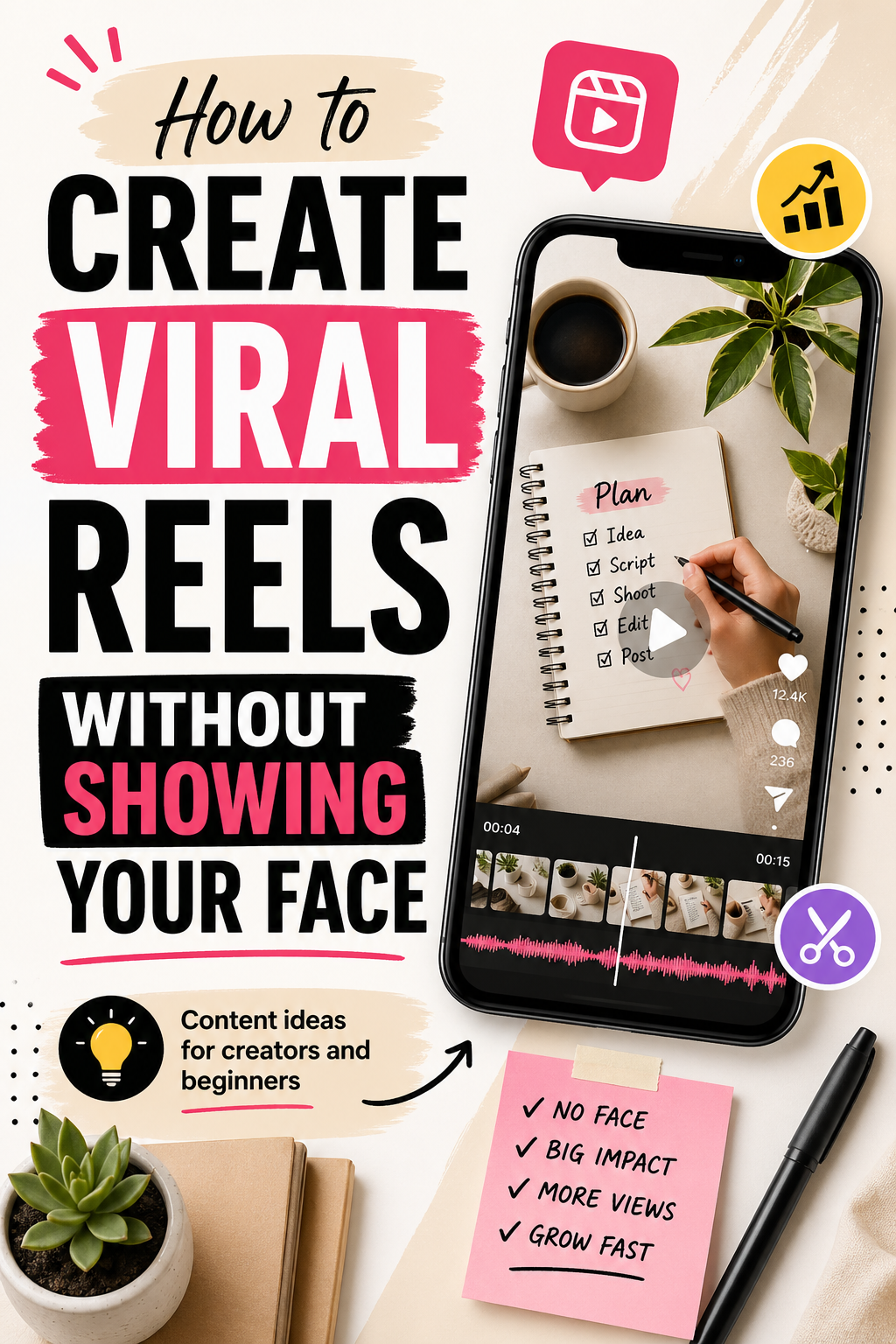
How to Create Viral Reels Without Showing Your Face
You don’t need to be on camera to go viral. Faceless reels and short-form videos are one of the fastest-growing content strategies right now — and they’re perfect for anyone who’s camera-shy, values privacy, or simply wants to build a content business without being a personal brand.
Why Faceless Videos Work
Faceless content removes the biggest barrier most people face when starting on social media — fear of being on camera. It also allows you to scale content production faster, since you’re not dependent on filming yourself every time.
Some of the most-watched content on Instagram Reels, TikTok, and YouTube Shorts features no face at all — just compelling visuals, clear text overlays, and engaging audio. The hook, the information, and the production quality matter far more than whether your face is visible.
Step 1: Choose a Profitable Faceless Niche
Not every niche works equally well for faceless content. The best ones are: finance and money tips, productivity and tools, eCommerce and dropshipping advice, AI tools and tech reviews, cooking and recipes, travel inspiration, and motivational content.
Pick a niche where you can consistently deliver value through information and visuals rather than personality alone.
Step 2: Create Your Video With AI Tools
This is where the game has completely changed. You no longer need a camera, microphone, or editing skills to produce professional videos. InVideo AI lets you generate complete videos from a text prompt — including voiceover, stock footage, text overlays, and music. You describe what you want and the AI builds the video.
For more cinematic AI-generated visuals, Kling AI produces stunning AI video clips that look nothing like generic stock footage. Combine Kling AI visuals with InVideo’s editing workflow for a powerful faceless video production pipeline.
Step 3: Edit for Maximum Watch Time
The key to a viral reel is keeping people watching. Use these proven techniques: hook viewers in the first two seconds with a bold statement or visual, keep cuts fast (every 2–3 seconds), add captions so people can follow along without sound, and end with a clear call to action or cliffhanger.
Filmora is an excellent editing tool for polishing faceless videos. Its auto-caption feature, audio visualizer, and speed controls make it easy to create snappy, engaging edits even without video editing experience.
Step 4: Use the Right Hook Formula
The hook is everything in short-form video. Start every reel with one of these proven formats: a surprising statistic (“Most people don’t know this about…”), a bold claim (“This tool changed how I make money online”), or a direct promise (“Here’s how to do X in under 5 minutes”). Your hook determines whether someone watches or scrolls.
Step 5: Post Consistently and Test
Faceless content requires volume to find what works. Post at least four to five times per week, test different hooks, topics, and video styles, and pay close attention to watch time and shares in your analytics. The videos that get shared are the ones worth replicating.
No Face Required — Start Today
Faceless video is one of the most scalable content strategies available. With AI tools handling the heavy lifting, there’s no excuse not to start. Pick your niche, write your first script, generate your video, and post it today. Your first viral reel might be one upload away.
Article 6: Simple Facebook Marketing Strategies That Still Work
Category: Social Media Marketing SEO Keyword: Facebook marketing strategies for small business Affiliate links: InVideo, Tailwind, Shopify
Facebook has over three billion monthly active users — making it still the largest social media platform on the planet. Yet many small business owners either ignore it or use it wrong. The businesses winning on Facebook right now are using a handful of simple, proven strategies that consistently drive reach, engagement, and sales.
Why Facebook Still Matters for Business
Despite the rise of TikTok and Instagram, Facebook remains the dominant platform for people aged 30–60 — often the most purchase-ready demographic for online businesses. Facebook Groups, Marketplace, and ads give business owners multiple ways to reach their audience without spending a fortune.
The key is knowing which tactics actually work in today’s algorithm — because what worked five years ago is largely outdated.
Strategy 1: Build a Community With Facebook Groups
Pages have declining organic reach, but Groups are thriving. Creating a free Facebook Group around your niche gives you a captive audience you can communicate with directly, without fighting the algorithm.
Post value-first content in your group — tips, Q&As, polls, and resources. Build trust before promoting. A highly engaged group of 500 targeted members will drive more sales than a page with 10,000 passive followers.
Strategy 2: Use Video to Dominate the Feed
Facebook’s algorithm heavily favors video content — especially native video uploaded directly to Facebook rather than shared links from YouTube. Short videos between 60 seconds and 3 minutes perform especially well.
InVideo AI makes it easy to create scroll-stopping Facebook videos in minutes. Use it to create product demonstrations, tip videos, and promotional content that plays natively in the feed and captures attention instantly.
Strategy 3: Post With a Purpose — and a Schedule
Random, inconsistent posting is the number one reason Facebook business pages fail. Decide on your posting frequency (three to five times per week works well for most businesses) and stick to it.
Tailwind lets you schedule Facebook posts in advance alongside your Pinterest and Instagram content, keeping your entire social media presence organized and consistent from one dashboard.
Strategy 4: Send Facebook Traffic to Your Store
All your Facebook content should have one ultimate goal — driving traffic to your online store or offer. Every post should include a soft or direct call to action pointing people toward your website, product page, or lead magnet.
If you sell products online, make sure your Shopify store is connected to your Facebook page through the Facebook Shop integration. This lets your followers browse and buy products directly from your Facebook page, reducing the number of steps between interest and purchase.
Strategy 5: Analyze and Optimize Weekly
Facebook provides detailed free analytics through Meta Business Suite. Check your page insights every week. Look at reach, engagement rate, and link clicks. Identify which post types drive the most traffic and double down on those formats.
The businesses that grow consistently on Facebook aren’t necessarily posting the most — they’re posting the most strategically, based on real data about what their audience responds to.
Start Simple and Stay Consistent
You don’t need a big budget or a marketing team to succeed on Facebook. Start with a consistent posting schedule, create one video per week, build a community group in your niche, and drive traffic to your store with clear calls to action. These four moves alone can dramatically increase your Facebook reach and sales.