Affiliate Content Repurposing: Turn One Article Into a Full Campaign
Affiliate content becomes difficult to sustain when every channel starts with a blank page. A blog article needs research, a Pinterest Pin needs a clear visual promise, an email needs a useful reason to click, and a short video needs a focused script. Creating each asset separately multiplies the workload and often produces disconnected messages.
A better approach is an affiliate content repurposing system: build one trustworthy core article, then adapt its strongest ideas for the channels your audience already uses. Repurposing does not mean copying the same paragraph everywhere. It means preserving the helpful insight while changing the format, length, opening, and call to action for each platform.
This guide shows beginners how to create that system without making exaggerated claims, overwhelming readers with links, or publishing low-value variations.
1. Start With One Specific Audience Question
The core asset should answer one real question. Broad topics such as “best online tools” usually produce shallow content because the audience, problem, and decision are unclear. Narrow the topic until a reader can recognize that the article was written for their situation.
For example, replace “video marketing tools” with “how a solo store owner can create a product demo without advanced editing.” Replace “affiliate website setup” with “what pages a beginner affiliate site needs before publishing product reviews.” A narrow question makes research easier and gives every repurposed asset a clear purpose.
- Audience: Identify one beginner, creator, or small-business owner.
- Problem: Describe the obstacle in plain language.
- Useful outcome: State what the reader should understand or complete.
- Next step: Choose one appropriate action after reading.
If you need help choosing a sustainable subject area, use this guide to choose an affiliate marketing niche you can maintain. A repeatable system works best when the topic fits both audience demand and your ability to explain it responsibly.
2. Build a Core Article Worth Repurposing
Repurposing cannot rescue a weak source. The core article needs enough substance to support several smaller assets. Before drafting, create a compact brief with the search intent, reader outcome, main sections, facts requiring verification, links, and prohibited claims.
A useful affiliate article normally includes context, a practical process, selection criteria, limitations, and a next action. If a tool is mentioned, explain why it fits the specific step rather than presenting it as a universal solution. When discussing prices, features, or policies, verify the current information on the provider’s official page before publication.
For a deeper quality framework, review how to write product review articles that build trust. The same principle applies here: disclose commercial relationships, separate verified facts from opinion, and never pretend to have tested something you have not used.
3. Create a Repurposing Map Before Publishing
Do not wait until the article is live to decide what else to create. During the outline stage, mark sections that can become standalone assets. This makes the supporting content more coherent and reduces rushed captions.
A practical map for one article might include:
- One checklist Pin summarizing the process.
- One mistake-focused Pin addressing a common shortcut.
- One comparison Pin explaining two approaches.
- One short email built around the main reader problem.
- One 30–45-second video script demonstrating a single step.
- Two Facebook posts using different hooks and examples.
Every asset should lead to a specific relevant page. Avoid sending all traffic to the homepage when the article answers the question more directly. Use tracking parameters consistently so analytics can show which channel and angle produced useful visits.
4. Adapt the Idea for Pinterest Search Behavior
Pinterest users often search for a plan, checklist, tutorial, or visual idea. A strong Pin therefore needs a clear promise that matches the destination article. Extract one practical outcome from the article and make that the Pin’s headline.
Instead of “Affiliate Marketing Tips,” try “Turn One Article Into Seven Assets” or “A Simple Weekly Affiliate Content Plan.” Keep the design readable on a phone, give the headline generous margins, and use one dominant visual concept. The description can explain what the reader will learn and why the guide is useful, but it should not repeat the headline word for word.
Use different legitimate angles for the same article rather than uploading nearly identical Pins. One design can focus on the workflow, another on common mistakes, and another on a beginner checklist. Learn more about keyword intent and destination alignment in Pinterest marketing for beginners.
5. Turn One Section Into a Short Video
A short video should not summarize the entire article. Choose one visual step that can be understood quickly. For example, show how the core article becomes a simple content map: article, Pin, email, video, and social post.
Write a script with a direct opening, three concise teaching beats, and one call to action. If templates and automated scene building remove a real production bottleneck, explore InVideo for creating structured marketing videos. If you prefer timeline-based control over cuts, captions, and audio, review Filmora’s video-editing tools.
These are affiliate links, which means EcomArena may earn a commission if you purchase through them, at no additional cost to you. Choose a tool only after checking its current features, licensing terms, export options, and cost against your actual workflow.
6. Rewrite the Message for Facebook
Facebook copy usually benefits from a conversational opening and a useful observation before the link. Lead with the problem: creating every post separately wastes time and weakens consistency. Then share one small lesson from the article and invite readers to view the complete process.
A second post can use a different angle, such as the mistake of copying the same caption across platforms. This gives the article another chance to reach readers without repeating identical copy. Keep paragraphs short, use only a few relevant hashtags, and make the call to action clear.
When an article image is designed primarily for a tall Pinterest format, check how it appears in the Facebook feed. If important text is cropped or too small, create a separate social image rather than forcing one asset into every placement.
7. Build an Email That Adds Value Before the Click
An email should not be a link announcement. Open with a relatable bottleneck, explain one useful part of the solution, and then link to the article for the complete workflow. A simple structure is problem, insight, practical example, and next step.
Keep the email focused on one action. If the article includes several affiliate products, do not place every offer in the email. Send readers to the educational article, where the recommendations have context, limitations, and a disclosure. This is more useful than presenting a list of isolated commercial links.
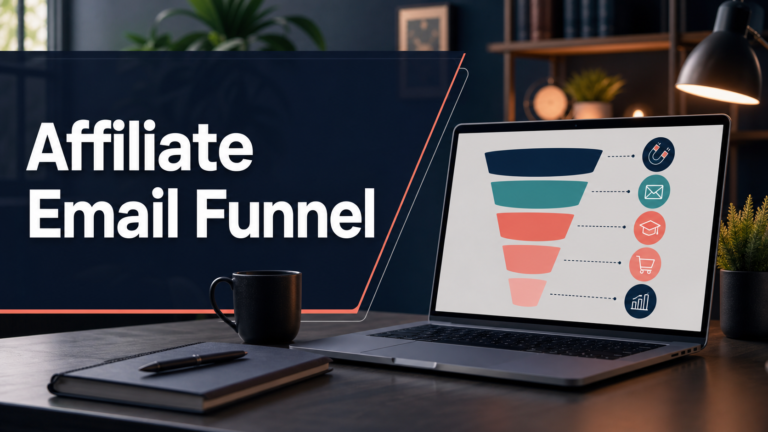
If email is a regular part of your strategy, the guide to building a simple affiliate email funnel explains how to connect educational messages without overwhelming subscribers.
8. Schedule the System Without Creating a Content Factory
Efficiency matters, but volume is not the goal. A small number of distinct, accurate assets is better than many automated variations that say nothing new. Create a weekly sequence in which each asset has its own job.
- Day 1: Publish the core article and its first Pin.
- Day 2: Share the problem-focused Facebook post.
- Day 3: Publish a checklist Pin and send the email.
- Day 4: Share the short video.
- Day 5: Publish the mistake-focused Pin.
- Later: Test a new angle only when it is genuinely different.
If Pinterest is an important source of traffic, a scheduler can reduce repetitive publishing work. You can review Tailwind’s Pinterest scheduling features and compare them with your current workflow. Check current plan limits and supported features before deciding.
9. Protect the Website Behind the Content
Repurposed content sends attention back to your website, so the destination must be reliable. Review the article on mobile, test every link, compress large images, and make disclosures visible. Confirm that navigation, forms, and analytics work before increasing traffic.
If you are establishing a new content site, compare Namecheap’s domain and hosting options with alternatives based on renewal price, support, backups, security, and performance. A recognizable domain is useful, but it does not replace trustworthy content or proper website maintenance.
10. Measure the Journey, Not Just the Post
Track more than impressions. A Pin may earn saves but few article visits. A Facebook post may send fewer clicks but produce longer reading sessions. An email may generate the most qualified traffic. Use campaign parameters to compare channels and review results weekly.
Useful measures include outbound click-through rate, engaged reading, affiliate-link clicks, email sign-ups, and conversion rate where available. Change one meaningful variable at a time. If you change the headline, design, audience, and destination together, you will not know what caused the result.
Keep a simple record containing the publication date, source article, channel, creative angle, destination, and outcome. After several weeks, patterns will show which questions and formats deserve more attention.
Common Repurposing Mistakes
- Copying instead of adapting: Rewrite the opening, structure, and CTA for each platform.
- Changing the promise: Every social headline must accurately match the destination.
- Overloading content with offers: Recommend only products relevant to the reader’s next step.
- Ignoring disclosures: Clearly identify affiliate relationships wherever required.
- Automating without review: Check facts, spelling, images, links, and scheduling before publication.
- Measuring only reach: Connect channel activity to meaningful website behavior.
Build Your First Repurposing Cycle
Choose one audience question and create a strong core article before planning more content. Mark three sections that can stand alone, turn each into a distinct channel-specific asset, and schedule them across the week. Review the complete journey on a phone and verify every claim and link.
The advantage of an affiliate content repurposing system is not that it produces more noise. It helps one useful idea travel further while keeping the message consistent, the recommendations contextual, and the workload manageable. Start with one complete cycle, measure what readers actually use, and improve the weakest stage before adding more channels.